
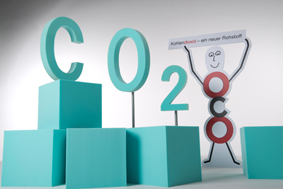
 The greenhouse gas carbon dioxide can be used as a basic building block for plastics, says Bayer MaterialScience.
Following a successful test phase and promising market analysis, the company now plans to invest €15 million in the construction of a production line at its Dormagen site, which will use CO2 to produce a precursor for premium polyurethane foam.
The line will have an initial annual production capacity of 5,000 metric tons.
The objective of the Dream Production project is to launch the first CO2-based polyols on the market starting in 2016. Processors of polyols and polyurethanes have already expressed considerable interest.
High-quality polyols based on CO2 are not currently available on a commercial scale. The new polyols from Bayer MaterialScience have at least the same high level of quality as conventionally manufactured materials and a more sustainable impact. Using a certain amount of CO2 as a building block enables a reduction in the amount of the petroleum-based raw material propylene oxide, which polyols are normally made entirely from. The CO2 balance of the new process is far better than that of the conventional production method.
“Improving the sustainability of everything we do is an integral part of our business strategy and this principle is implemented in our Dream Production project,” said Bayer MaterialScience CEO Patrick Thomas. We have succeeded in turning a waste gas that is potentially harmful to the climate into a useful raw material. That helps the environment and mankind, and we all benefit.”
Bayer MaterialScience developed the manufacturing process in collaboration with partners in industry and academia. The company discovered the catalyst that brings about the chemical reaction with the required level of efficiency, and developed it together with the CAT Catalytic Center, a research facility in Aachen, Germany.
The process was tested extensively in a pilot plant at the Leverkusen site as part of the publicly funded Dream Production research project. This was accompanied by a study of market demand.
The new polyol is used for the production of polyurethane foam, which is found in many everyday items, including upholstered furniture, shoes and automotive parts, and is also used to insulate buildings and refrigeration equipment.
“The first major field of application will most likely be mattress production,” said Dr Karsten Malsch, Dream Production project manager at Bayer MaterialScience (pictured).