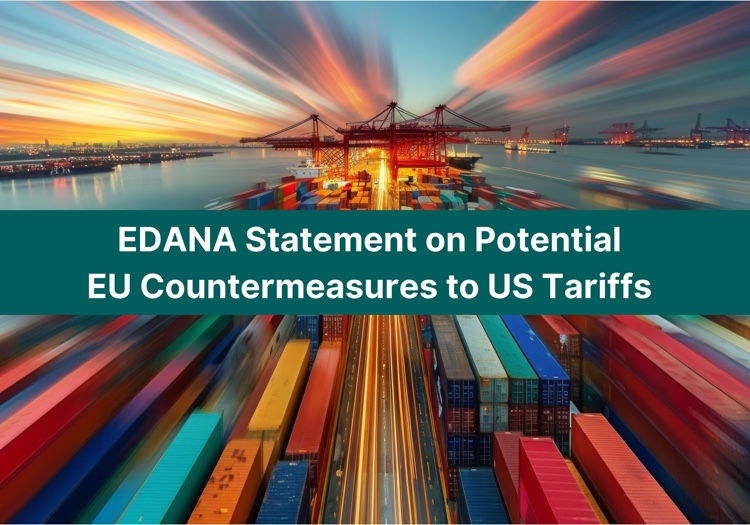
BRUSSELS - EDANA, the global association representing the nonwovens and related industries, has responded to the European Commission’s potential decision to implement countermeasures in response to the recently imposed US tariffs on EU steel, aluminium, and certain derived products, with a call for further negotiations to reach a mutually beneficial resolution.
As the voice of over 250 companies in the nonwovens supply chain, EDANA says it is closely monitoring the implications of these measures and their potential impact on its members.
“While we welcome the intention to safeguard the interests of EU industries affected by the US tariffs, EDANA joins those already raising significant concerns about the potential unintended consequences of these countermeasures on our sector,” EDANA said in a statement.
“The EU’s relationship with the US is of critical importance, and we believe the primary focus should be on negotiations to reach a mutually beneficial resolution. It is essential to avoid escalating trade tensions that could result in long-term harm to industries on both sides of the Atlantic.”
A particular area of concern is the potential effect of these countermeasures on critical raw materials, such as fluff pulp. Fluff pulp, or pulp-based fibres, are a natural raw material used in the absorbent core of absorbent hygiene products, this is due to their high absorbency rate.
Baby nappies, menstrual products, and incontinence products all rely on fluff pulp to absorb and retain human fluids. In 2024, the US provided more than 80% of the fluff pulp imported into the European Union.
“This is just one example of the broader impact these countermeasures could have on the industry. These measures could lead to increased production costs, higher finished product prices, supply chain disruptions, and a competitive disadvantage for European nonwoven manufacturers in global markets,” the statement added.
“It is important to highlight that these proposed measures risk being unfair, as they will disproportionately impact the more vulnerable members of our society, including the elderly, hospitalised individuals, young families with children, and women. Any regulatory changes should carefully consider their social implications to avoid exacerbating inequalities.”
Considering these concerns, EDANA is urging the European Commission to carefully assess the economic impact on downstream industries, ensuring that countermeasures do not disproportionately impact sectors dependent on essential imported raw materials.
‘We welcome the opportunity to contribute to the ongoing consultation process and strongly advocate for a balanced approach that safeguards European industry while maintaining fair and open trade relations with the US,” it said.
“The European Commission has the opportunity to prevent a harmful cycle of retaliatory tariffs that could have a net negative effect on both economies.”