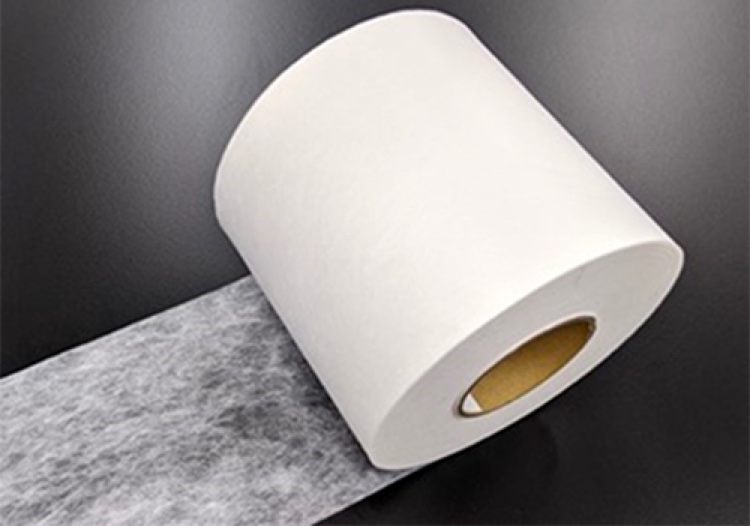
TOKYO - Toray Industries, Inc., has developed a spunbond nonwoven fabric that is persistently hydrophilic and is gentle on the skin. This fabric is said to be suitable for disposable diapers, masks, feminine hygiene products, and other sanitary applications.
Toray said it plans to start full-scale production when the production technology is well established.
Spunbond nonwoven fabrics for sanitary applications are normally made of polypropylene, which is softer than polyester. As polypropylene is hydrophobic, polypropylene spunbond nonwoven fabrics must be coated with a hydrophilic agents for the application of diapers, masks, and feminine hygiene products. However, the coated hydrophilic agents are easily runoff from the fabrics on contact with water. Consequently, the fabrics lose hydrophilicity.
Toray has been working on this problem through research into hydrophilizing polymer itself rather than surface treatment of the fabrics. The company has been focusing on polyester and developed special domain structures by copolymerizing polyester with a well-defined molar mass hydrophilic component. The domain structures are said to significantly improve the hydrophilicity of the polyester and result in a new spunbond nonwoven fabric that is persistently hydrophilic.
This polyester spunbond nonwoven fabric is as soft as polypropylene nonwoven fabrics, which has excellent flexibility. Persistent hydrophilicity of the fabric promotes liquid permeation without liquid remaining or spreading out on the surface. In addition, the fabric shows no cytotoxicity, which is an indicator of the skin irritation. Hence, the fabric is skin-friendly and suitable for the applications such as diapers, masks, and feminine hygiene products, which have direct contact with the skin.
With the polyester able to be polymerized using bio-based or recycled materials, Toray said it will push ahead with efforts to reduce environmental impact and achieve a sustainable economy.