FRANKFURT – The ambitious ReHubs initiative, if successful, is poised to have a major impact on the European nonwovens industry, in the local raw materials it will make available and in other opportunities ranging from the adoption of technologies and processes to active new inter-disciplinary collaborations.
Not least, it calls for the establishment of between 150-250 dedicated new recycling hubs throughout Europe in the next few years, each with annual capacities of between 50-100,000 tons.
ReHubs is being initiated by Euratex – the Brussels-based organisation which represents around 154,000 companies employing 1.47 million workers in the European textiles and clothing industries.
Fibre-to-fibre
The aim is to achieve the successful fibre-to-fibre recycling of 2.5 millions tons of Europe’s textile waste by 2030 in response to the separate collection of textile waste, which will become mandatory for all EU member states on January 1st 2025.
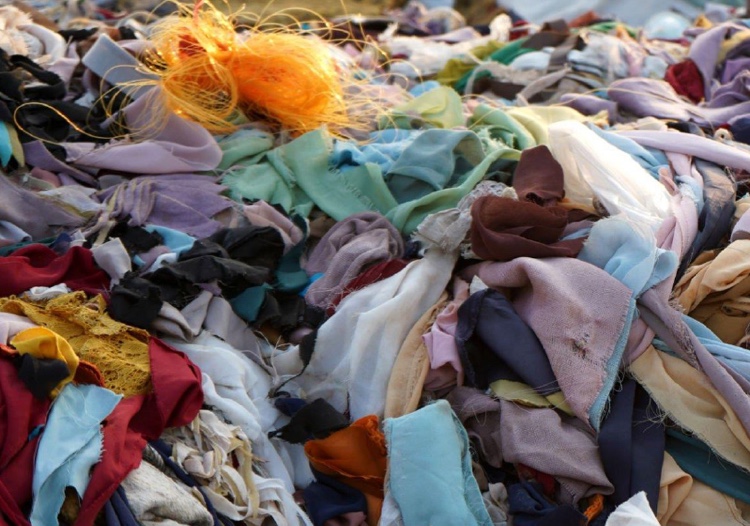
Europe has a 7-7.5 million tons textile waste problem, of which only 30-35% is collected today, and very little of that is returned to fibre form to enable true value retention.
“With the adoption of the EU Textile Strategy in March this year, the European Commission has launched a very ambitious journey that will change the nature of our industry,” said Euratex president Alberto Paccanelli in a press conference during Techtextil 2022 in Frankfurt. “It calls for more focus on sustainability and durability, more transparency within the supply chain, more communication with the consumer and also a better level playing field for our European companies, with more investment in innovation, digitalisation and skills development.
“This is a very ambitious agenda which needs to result in a more resilient European textile industry. The coming two years will be critical to translate that vision into specific legislation and concrete programmes.”
Council
With the backing of a business council of key companies spanning the entire textile supply chain – from fibre leaders like Indorama Ventures and Lenzing to leading sports brand Decathlon and fashion giant Inditex – ReHubs is seeking to transform textile recycling in Europe.
The aim is to make possible the fibre-to-fibre recycling of 2.5 million tons of waste at an investment cost of €6-7 billion, largely to scale up sufficient sorting and processing infrastructure.
With the addition of many new recycling hubs the creation of such a recycled fibres industry in Europe could be a major opportunity for near-shoring.
Once matured and scaled, Euratex believes this industry could become profitable, with a total annual market size of between €6-8 billion generating around 15,000 direct new jobs by 2030.
“Sooner or later, textile materials become non-reusable waste, making recycling a must once all other options are exhausted,” said Robert van de Kerkhoff, Lenzing’s chief commercial officer and president of CIRFS, the European manmade fibres association. “A supply chain requires sorting for both re-use and recycling and a range of mechanical and chemical recycling solutions to be established.”
To go from a linear to a circular textile-recycling value chain, he added, five main parts of the value chain must be matured and scaled, namely collection, sorting streams for both reuse and recycling, pre-processing and recycling itself.
Turning point
“Recycling is not yet mature, but we may be at the brink of a turning point as different technologies race to scale,” van de Kerkhoff said. “We are aiming for the fibre-to-fibre recycling of between 18-26% of Europe’s total textile waste by 2030, but success is not a given. To reach critical scale, real collaboration and transition funding is required, along with investments at company level and a huge public sector push.”
The first immediate project will examine current sorting technologies to accurately identify materials for subsequent circular recycling processes. Led by Texaid AG, of Schattdorf, Switzerland, the aim is to establish the first 50,000 ton facility by the end 2024.