 Bayer MaterialScience has taken another major step towards using CO2 for plastic production from 2016, with a €15 million production line now under construction at the company’s Dormagen site in Germany.
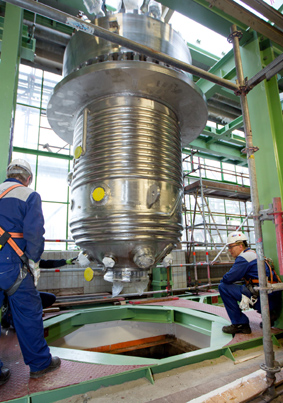
A chemical reactor weighing some 25 metric tons is already in place at the heart of this line and a CO2 tank is due to be installed later this year.
“If everything continues to run smoothly we will be able to start operations at the beginning of the coming year,” said project manager Karsten Malsch “We are right on schedule.”
Bayer MaterialScience intends to use the new production line as part of the Dream Production project and integrate carbon dioxide as a raw material for polyols on a commercial scale for the first time. Polyols are crucial precursors for manufacturing foam. The line is designed for an annual production capacity of 5,000 metric tons and the plant is for the new polyol – which contains approximately 20% CO2 – to initially be used in the manufacture of polyurethane foam mattresses.
Intensive tests have shown that the material using CO2 is at least as good as conventional products. The carbon dioxide replaces some of the petroleum that these kinds of polyols and polyurethanes are usually based on.
“The plastics industry has long been looking for an alternative raw material basis to relieve the reliance on fossil fuels,” said Malsch. “We believe that our new process can offer a solution.”
Some scientific groundwork was required in order to use CO2 in plastics production. Bayer MaterialScience performed this in collaboration with the CAT Catalytic Center, a research institute at Aachen University. The greatest challenge was in finding a catalyst that would cause the carbon dioxide, which is chemically very inert, to react efficiently with other substances. The partners have discovered the appropriate catalyst.
The research and development work is still ongoing and Bayer hopes to further increase the proportion of CO2 in the products in the future. At the same time, it also aims to increase the number of CO2-based plastics.