 Germany’s Hohenstein Institute has established a range of test procedures for assessing the natural fibre-based textiles, nonwovens and composites that are increasingly being adopted by the automotive sector.
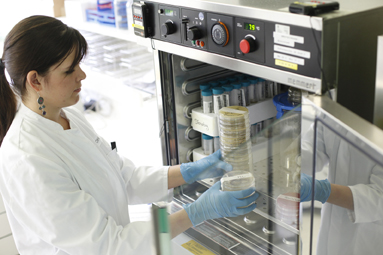
“The challenges of using new, fibre-based materials in the automotive sector are numerous,” says Dr Timo Hammer, head of Hohenstein’s Bioservice Team based in Bönnigheim. “Given the variety of biological requirements, our standardised lab tests for odour evaluation, material damage, biodegradability and allergenic potential allow automotive manufacturers and suppliers to match the material properties to the requirements of each application.”
Microorganisms, for example, cannot be allowed to settle, despite constantly changing temperature and humidity conditions, since they could lead to unsightly effects such as spots of mildew, as well as unpleasant odours in the vehicle interior.
While this resistance has to be guaranteed for the lifetime of the vehicle, after decommissioning the focus shifts to the interior fittings and attached parts to satisfy end-of-life degradation requirements – without residue if possible.
To manage this balancing act the material properties have to be analysed in detail and optimised.
Scientists at the Hohenstein Institute use realistic models for simulations such as test samples infested by aggressive mould. The materials are then analysed for fibre damage. To accommodate the global setup of the automotive industry, a portfolio of various moulds occurring all over the world has been built up.
A soil burial test is used to determine how well a material will rot away at the end of its lifetime. This test requires a material sample to be buried in biologically active soil under standardised conditions. The soil provides an ideal environment for bacteria and fungi. The material is analysed at defined time intervals and compared with its new condition to provide information about the degradation process.
The sensory lab at the Hohenstein Institute also allows a reproducible quantification of odour formation to determine if the material has an inherent odour or if bad odours are the result of microorganisms settling on the material.
Specially trained test subjects detect very fine odour differences on a special test device called an olfactometer. These are then evaluated with the help of a dedicated software.
The growing number of allergy sufferers is another challenge for car manufacturers and their suppliers. Several automotive manufacturers are striving to create an ‘allergy-free’ interior where natural materials as well as plastics, paints and varnishes pose no health risks.
To gauge allergenic potential, the Hohenstein scientists employ a cost-efficient cell culture test for which they use the body’s own immune cells. If a sample has allergenic potential, the reaction of these guard cells works like an alarm during the tests in the lab.