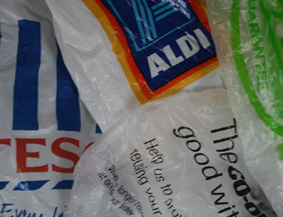
 A process for turning waste plastic bags into carbon nanotubes (CNTs) is being developed at the University of Adelaide in Australia
The university’s nanotech research group used the plastic bags as a carbon source and employed a a catalyst/solvent-free chemical vapour deposition (CVD) method to grow the CNTs inside nanoporous anodic alumina membranes (NAAMs).
The NAAMs have hexagonally arranged nanopores, which enables the organisation and geometry of the nanotubes to be controlled.
The transport performance of the resulting CNTs–NAAMs was tested by several dye molecules with positive, negative and neutral charge and the results demonstrate the ability of these membranes to selectively tune molecular transport as a function of the interaction between molecules and inner surface of the CNTs.
The study proves that an environmentally non-degradable waste material like commercial plastic bags can be directly used to produce such sophisticated nanodevices as CNT membrane, the researchers say.
“Non-biodegradable plastic bags can be a serious menace to natural ecosystems and present a problem in terms of disposal,” says Professor Dusan Losic, ARC future fellow and research professor of nanotechnology at the university’s school of chemical engineering. “Transforming these waste materials through ‘nano-technological recycling’ provides a potential solution for minimising environmental pollution at the same time as producing high-added value products.”
The huge potential market for carbon nanotubes relies on industry’s ability to produce large quantities more cheaply and uniformly. Current synthesis methods usually involve complex processes and equipment, with most companies on the market measuring production output in only several grams per day.
The work has been published in a paper by Elsevier.