 Driven by the demand for continuous process improvements to increase plant efficiency and lower customer costs, power plants around the world are striving to upgrade conventional water treatment systems.
One way they are achieving this is by employing reliable membrane technologies such as microfiltration.
At the VGB Conference Chemistry in Power Plants 2012 from October 24-25 in Hamburg, Germany, Bernhard Doll and Ram Venkatadri of Pall, will outline examples of the latest membrane technologies that can help power plants reduce costs, improve processes and optimise water footprint.
“Today’s power plants are under significant pressure to meet both environmental and economic demands,” says Doll. “Pall’s technology gives them the opportunity to not only meet increasingly stringent regulations, but to save money in the process.”
Continued success for power plants is dependent on a number of factors including regulatory limitations on heavy metals, community acceptance, efficient machinery and processes and resource availability. In particular, significant volumes of water are required for cooling, boiler feed water, and scrubber make-up.
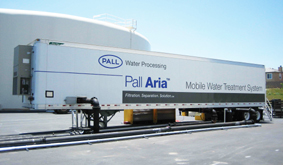
The Pall Aria system, a cornerstone of the company’s water treatment solutions portfolio, employs unique hollow fibre membranes with outstanding regeneration capabilities that cost-effectively produce high-quality water. The robust fibres also help ensure consistent system performance and reliability.
“With hundreds of Aria membrane water treatment system installations worldwide, Pall has gained tremendous expertise in water treatment in power plants as well as many other industrial and municipal sites,” says Doll. “Power plants will benefit from technology designed to meet their specific water treatment needs.”
Pall Power Generation is the global leader in providing filtration and separation solutions to the power generation industry.