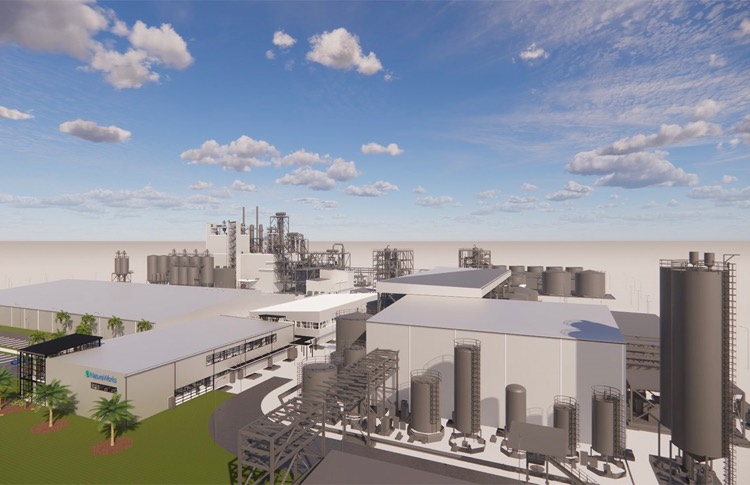
ZURICH – ABB is to automate the greenfield plant being planned by NatureWorks for converting sugar cane into Ingeo polylactic acid (PLA) biopolymer in Thailand.
The plant will ferment and distill plant-based sugars – in a process similar to making beer or wine – converting them first to lactic acid then lactide, and then polymerize them into Ingeo. At the new site, these three separate production processes will be fully integrated, resulting in significant improvements in energy and production efficiency.
In addition, the integration of the fermentation phase will secure the supply of lactic acid. The Thailand facility will use sugarcane as feedstock and is set to produce 75,000 tons of sustainable plastic per year when fully operational. The anticipated projected startup for this greenfield facility is in the second half of 2024.
ABB’s scope of work is a two-part order including a front end engineering design study followed by detailed automation project execution, with ABB acting as the main automation contractor. ABB will deliver the hardware, software, control room design solutions, engineering and site support to fully develop NatureWorks’ greenfield system. ABB’s market leading Ability 800xA distributed control system will maximise plant efficiency and reliability through automation. Leveraging this technology, ABB will integrate inputs from all key systems into one single user-friendly overview. As a result, operators will be able to utilise data insights from all areas of the plant, delivered in real time, to drive efficiency, reduce risk and ensure production optimisation.
The project will apply state based controls (SBCs), enabling operators to make fewer interactions to start up a unit and reduce risk by having access to the right information at the right time. In addition, ABB’s automated engineering batch application tool will be implemented for the project.
“ABB’s global presence, especially in the US and Thailand, combined with its deep expertise in the chemical industry, leading automation solutions and design optimisation approach, makes it the obvious choice as a partner to help achieve meaningful progress in our new plant,” said Steven Bray, vice president of operations and project programme manager at NatureWorks.
Bioplastics today represent less than 1% of all plastic produced globally but production is expected to grow over 260% between 2020 and 20261.
Ingeo is used in a wide-range of plastic and fibre products from compostable food packaging – coffee capsules, tea bags, food containers – to 3D printing filament, diapers and even refrigerator liners. Compared to traditional fossil-based polymers, manufacturing Ingeo produces approximately 80% less greenhouse gases and uses 52% less non-renewable energy.