BURIASCO – Renolit Composites, the Italian automotive extrusion and thermoforming specialist which is part of the German-headquartered Renolit Group, reports increasing success with its Tecnogor 100% recyclable composite for automotive interior applications.
Based on safe, clean and recyclable glass fibre nonwovens, it is enabling Tier 1 thermoformers to combine superior part performance with consistent quality, higher productivity and lower production process costs, the manufacturer reports.
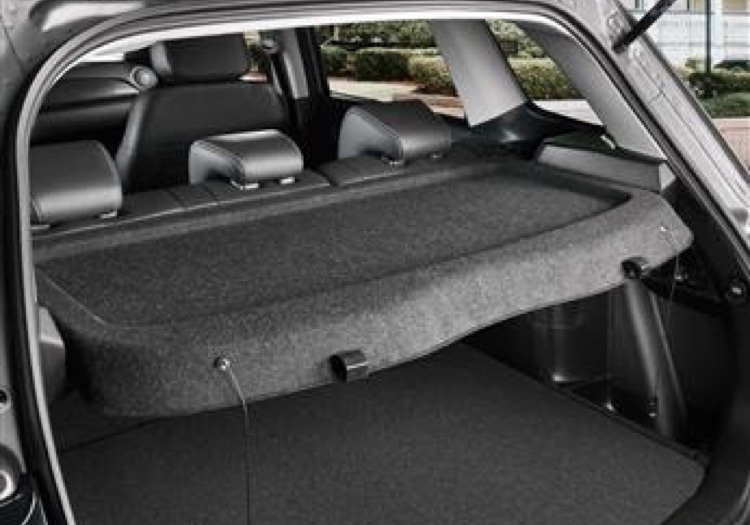
Leading German, Italian, French and Japanese carmakers are now using Renolit Tecnogor for a variety of thermoformed, custom coated, interior 3D trim parts for vehicles. Applications include parcel shelves, load floors, seat back covers, dashboard inserts and trunk trims.
A key benefit for thermoformers using this polypropylene and glass fibre-based substrate is that it can be shaped in a ‘glue free’ one-step-process. It is also a very safe material to use on the shop floor compared with a glass fibre reinforcement fabric since the glass fibres are completely embedded in the PP polymer matrix during extrusion.
As a result, there are no free floating fibres in the air or exposed glass fibres in the moulding, producing safe to handle finished trim parts with smooth surfaces and edges. To reduce cut-off trim, custom sized Tecnogor blanks are typically provided, which are supplied as standard with a highly compatible film for thermally bonding to textiles or other skin materials.
Automotive interior design engineers are able to take advantage of the outstanding mechanical properties of RTECNOGOR, which according to a published technical data sheet for the Type A grade, include:
- Flexural Modulus (Norm ISO 178) of L. ≥ 8200 N/mm2 , T. ≥ 3200 N/mm2.
- Charpy Impact Strength (Norm ISO. 179) of L. ≥ 17 KJ/m ², T. ≥ 15 KJ/m2.
- Heat Deflection Temperature, HDT (Norm IS. 75A) of L. ≥ 145 °C, T. ≥ 120 °C.
The superior stiffness and impact performance TECNOGOR is thanks to the unique, patented, PP/GF composition and extrusion process used by the Renolit Composites production lines in Italy.
“Our approach is to work closely with Tier 1 convertors and automotive OEMs, using our extensive knowledge and network to help customers to produce thermoformed parts at lower cost and higher productivity levels,” says sales manager Francesco Maffione. “We look for ways to achieve higher machine utilisation, to eliminate process steps, reduce changeovers and shorten production cycle times We also get involved in new product development projects, providing rapid technical support, which includes supplying test material produced on our in-house prototyping thermoforming line.”