 There is no doubt that the trend towards thinner cores in absorbent hygiene products will continue, since consumers see the value of both better fitting diapers and the less conspicuous adult incontinence and femcare articles they make possible.
Added to this, retailers like the reduced shelf space they make possible and the savings in packaging and transportation can be appreciated all along the supply chain.
At the recent Insight conference in St Petersburg, Florida, however, Don Young of MTS underlined the difficulty facing manufacturers wanting to introduce new products to achieve thinner products.
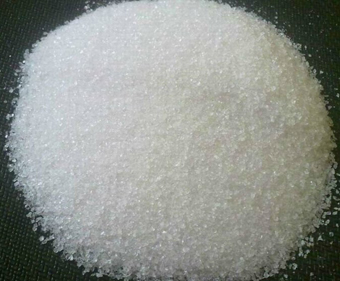
The history of aborbent cores, he said, started with the use of tissue followed by the introduction of fluff pulp and then SAPs (superabsorbent polymers).
Other developments have included Procter & Gamble’s stiff and curly fibres, Weyerhauser’s crosslinked fibres (HBA), the introduction of nonwoven acquisition layers and more recently P&G’s DryMax.
Possible options for creating new absorbent cores he suggested include compressed fluff/SAP cores, those containing ‘gel lock’ technology, various nonwoven/SAP sandwich constructions and meltblown and airlaid products.
The major manufacturers of aborbent hygiene products, however have amassed extensive estates protecting technologies not even currently used.
As far as absorbent cores are concerned, P&G has 80 current patents covering the technology, Kimberly-Clark a further 35 and SCA a number covering foam applications and density gradients.
Mr Young suggested, however, that the prior art contained in lapsed patents might open up options that were not until only recently available.
A patent’s lifespan, he explained, is valid for either 17 years from its issue date, or 20 years from the filing date of the earliest application to which priority is claimed.
“The demand for thinner products will continue worldwide and be led by the retailers,” Mr Young concluded. “Patent issues, however, will make it difficult for small producers to compete without the use of prior art, and at the same time softness and cost will continue to be as important as thinness.”