
 Protecting products against forgery, product traceability, supply chain control and legal protection against fraudulent warranty claims are all becoming increasingly important in a globalised economy.
In response, in cooperation with Tailorlux, a specialist in anorganic phosphors, Kelheim Fibres has developed a viscose ‘fibre with a fingerprint’.
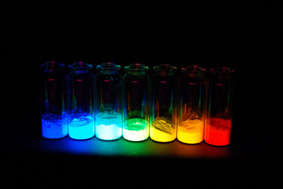
To achieve this, luminescent pigments from Tailorlux are incorporated in the viscose fibre matrix during the spinning process – so they are intrinsically bound to the fibre and durable.
Tailorlux produces customised pigments in a range of more than 300 billion combinations, each with its own individual spectrum.
Fibres incorporating these pigments bear their characteristic spectroscopic fingerprint in the body of the fibre, allowing the fibres and the products made using them to be precisely identified and therefore impossible to forge.
Validation is by the widely recognised and uncomplicated light spectroscopy method. The pigment can be detected in a non-destructive or a destructive examination (for example in the ash of a product).
For quick checks in the field, Tailorlux offers a simple hand scanner.
Kelheim’s latest development is primarily aimed at the paper industry. Viscose fibres can be easily integrated in the papermaking process and remain – together with the pigments incorporated in the fibre – in the paper.
More possible applications will be in the textiles and nonwovens industries, whenever products need an invisible but unique identification mark. These fibres can ensure the traceability of filters or other products for example – or they can help to control the compliance of predetermined supply chains in the textile industry.
Kelheim Fibres is able to manufacture diverse types of viscose fibres incorporating Tailorlux’ luminescent pigments, based on the customer’s specific needs, which allows a perfect match to the end product and to the customer’s production process.