 Camfil Farr aims to be the greenest and cleanest air filtration company in the world, which in practice implies supplying the most energy-efficient air filtration solutions on the market and helping customers save energy and reduce their environmental footprint. The company’s 2011 Sustainability Report covers initiatives and activities taken during the year to realise that goal.
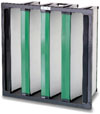
Indoor Air Quality (IAQ) is a major health issue, but cleaning air requires energy and contributes to carbon emissions related to energy production. The amount of power used by heating, ventilation and air conditioning systems in commercial, industrial and public buildings is being reduced today when Camfil Farr filters are installed.
This is because Camfil Farr’s products are low-energy filters with low pressure drop.
“The key lies in finding the most energy-efficient filtration solution for the task at hand,” says Alan O'Connell, president and CEO. “Today’s era of climate change poses a dilemma for decision makers, who must choose between protecting people’s health or reducing carbon emissions. Camfil Farr’s energy-efficient solutions, can help balance both needs.”
In 2011, Camfil Farr’s most energy-efficient filter solutions for ventilation accounted for 67% of global sales in the Comfort Air products segment. Since 2007, this share has grown 8%.
Meanwhile, the company has reduced its own energy consumption by 21% and improved the energy efficiency of its manufacturing plants by 38% in 2011, compared to the benchmark year of 2007.
Camfil Farr was the first company to develop energy and air quality rating systems for air filters.
“The new Energy Efficiency Classification system that came into force in January 2012 is good news from a sustainability point of view,” says corporate sustainability manager Myriam Tryjefaczka. “Customers will now get a clearer understanding of a filter’s annual energy consumption, initial efficiency and minimum efficiency. The classification will basically serve as a useful tool for our customers for selecting the most energy-efficient filter.”
During 2011 Camfil Farr also achieved several ISO certifications. Several subsidiaries also received awards for minimising their environmental impact and caring for the environment. Major progress was also made globally in the Group to develop a sustainable mindset from a human resource perspective.
“We are pleased to see that our sustainability efforts are being recognised in different areas,” says Tryjefaczka. “Several of our units were first in their country to be granted ISO 50001 certification for energy management and our eco-efficent products and solutions received awards around the world. Going forward, we will continue our sustainability efforts and dialogue with stakeholders, customers and policy makers, as well as internally with employees, so we can maintain our position as an industry leader in sustainability.”