
The recent Biopolymer Conference in Venice, Italy, was a first, and a great way to catch up with the latest developments in biopolymers – an increasingly important source of materials for nonwovens, now that fossil fuels are getting pricey, writes consulting editor Calvin Woodings.
Ahead of the meeting it was clear that the dictionary definition of ‘biopolymer’ was being adapted for marketing purposes, but I was nevertheless surprised to discover how different the modern ‘biopolymer’ had become.
‘Biopolymer’ used to refer to a macromolecule produced by living organisms, the key examples being cellulose, chitin, proteins, and DNA.
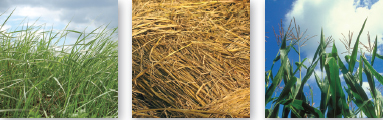
Plant cellulose is the most important biopolymer, growing naturally in enormous quantities – around 100 billion tonnes per year – most of which ultimately biodegrades to provide the raw materials for the next generation of plants.
In fact, biodegradability and biopolymers are linked by more than just the ‘bio’ prefix – the carbon cycle succeeds because it requires all living things to decompose back to their building blocks for reuse. It was therefore reasonable to begin to describe the new synthetic biodegradable polymers as ‘bio-polymers’, even though they did not originate in nature.
I was surprised, however, when at the conference, a delegate expressed the view that polyethylene was now the most important biopolymer on the planet!
The logic for this was impeccable – at least within the biopolymer world. Here, the word biopolymer is used if the polymer in question contains more than 25% of renewable carbon as determined by radiocarbon dating.
So the polyethylene now being produced from sugar cane in Brazil by Braskem – which contains 100% renewable carbon – is a biopolymer based on this new definition.
Another part of the rationale is that this polyethylene, which is chemically (but not radiochemically) identical to the petropolymer, originates from a monomer derived by refining new biomass rather than old (e.g. oil).
Furthermore, Braskem now produces 200,000 tonnes per year of polyethylene by this route, making it more important than any other of the synthetic biopolymers, the total production of which is still less than a million tonnes a year.
Clearly the new biopolymer is non-biodegradable, and this is claimed as an advantage because its manufacture is locking away carbon dioxide for thousands of years.
Why should biodegradability be important when you can burn this stuff, recover the energy without adding any new CO2 to the atmosphere, or simply recycle it with other plastics?
What about the 100 billion tonnes of cellulose? It clearly meets the new definition as well as the traditional one but is almost forgotten in the biopolymer world.
All but forgotten at least, because it did get a mention as a future source of ethanol from which polyethylene can be made.
A full report from the conference will appear in the next issue of Sustainable Nonwovens. To secure your copy now visit Subscribe