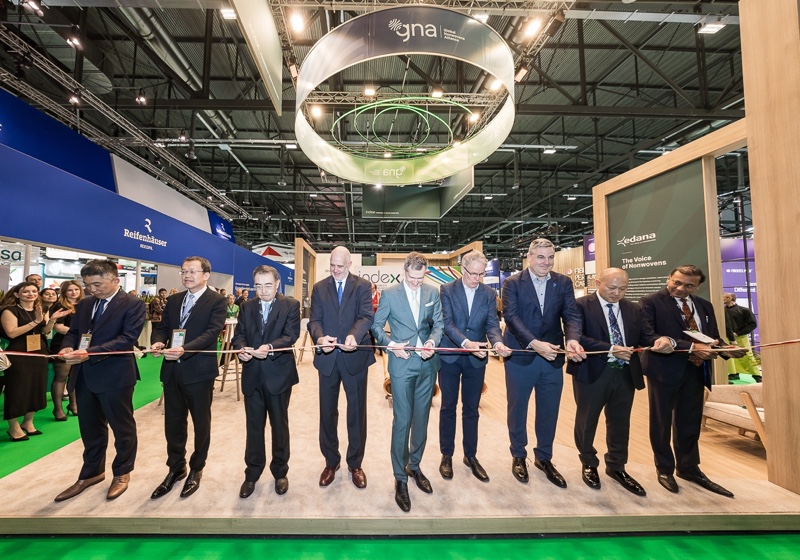
GENEVA – INDEX 26 closed at Palexpo in Geneva on 22 May, confirming its role as a central meeting point for the global nonwovens supply chain despite a challenging economic and geopolitical backdrop.
Spread across 50,000 square metres, the four‑day exhibition brought together 625 exhibitors from 44 countries and recorded 11,452 visits from industry professionals.
For nonwoven fabric producers and machinery builders, the event provided a concentrated view of how the sector is shifting from high‑volume, disposable products towards durable, high‑performance and more sustainable solutions. Exhibitors used the platform to present new production lines designed to increase throughput, deliver finer fibres and integrate circular design principles into mainstream applications.
Organisers reported strong participation from global decision‑makers and technical experts, underlining the show’s status as a forum where process engineers, product developers and brand representatives can align on future requirements. In a period when travel budgets and supply chains are under pressure, this level of engagement was viewed as a signal of continued strategic importance attached to the nonwovens sector.
Magali Fakhry Dufresne, director of INDEX, said that the edition demonstrated the industry’s determination to meet in person and advance technical and commercial discussions. She noted that INDEX remains “a great opportunity for the young generation to discover many innovations all gathered under one roof”, adding that exhibitors’ investment in high‑quality stands reflected the sector’s long‑term ambition.
Sustainability framed much of the technical content on the show floor, with environmental responsibility and performance increasingly treated as a single design brief. A key trend was the emergence of carbon footprint reduction as a leading performance indicator, influencing fibre selection, bonding technologies and line configuration for both disposable and durable nonwovens.
Many exhibitors highlighted developments in circular design, particularly concepts replacing complex multi‑layer composites with mono‑material structures engineered for recyclability. For mills and converters, these approaches aim to simplify end‑of‑life handling while maintaining filtration efficiency, barrier performance or softness, depending on the target application. Brand owners, in turn, are looking at these structures as a way to align product portfolios with emerging extended producer responsibility schemes.
Process and product safety also featured in several displays, including high‑performance protective textiles designed to meet new regulatory and brand safety standards without the use of PFAS. For technical managers in sectors such as medical, workwear and filtration, this shift illustrates how chemistry, fibre engineering and fabric design are being re‑balanced to deliver specification compliance without persistent substances of concern.
Beyond the stands themselves, the seminar programme and product presentations explored how companies can differentiate by moving beyond minimum regulatory compliance.
According to Pieter Meijer, Chairman of the INDEX Advisory Board, the discussions demonstrated that agility is now essential to respond to geopolitical shocks and regional crises while still investing in innovation and capacity. These sessions also underlined that regulatory change is increasingly acting as a catalyst for process optimisation and new product design.
The 2026 edition also placed particular emphasis on experience‑based learning, with dedicated areas for innovation showcases and live technical demonstrations. A new immersive feature, “Nonwovens: In Every Layer of Life”, aimed to contextualise how nonwoven materials underpin applications from hygiene and healthcare to mobility and construction, helping visitors relate machinery and material choices to end‑use performance.
Networking remained a core component of the event, reinforced by formats such as the inaugural Women’s Networking Breakfast, which was designed to support mentoring and knowledge transfer within the community. For suppliers and brand owners alike, such initiatives are becoming important in attracting and retaining the next generation of engineers and product managers in a competitive labour market.
Reflecting on the edition, Murat Dogru, general manager of EDANA, highlighted the growing synergy between automated machinery, smart chemistry and extreme basis‑weight reduction in driving more efficient and circular manufacturing models. He suggested that this combination is setting a direction of travel for nonwovens producers seeking both productivity gains and lower environmental impacts across their operations.
The next edition will take place from 15 – 18 May 2029 in Geneva.