VIRTUAL MINNESOTA – Despite the huge uncertainties currently impacting on everything in the year of Covid-19, North America’s nonwoven wipes market is on course to achieve huge growth in the next five years, according to Brad Kalil, director of market intelligence and economic insights at INDA, the North American Disposables and Nonwovens Association.
Speaking on the first day of the 2020 Virtual World of Wipes conference yesterday, he predicted that the overall consumption of disposable wipes in North America will climb by 5.7% in the five years between 2020 and 2024, compared to 2.6% between 2015-2019.
Growth will be highest in specific wipes categories such as home care, industrial specialities and food services, and around 20,000 tons of new nonwoven capacity will be required to meet this increased demand.
Svetlana Uduslivaia of Euromonitor, however, cautioned that after a spike in wipes sales during 2020 in response to Covid-19 – the household brand Clorox reported a 500% increase in sales during March – a downturn was likely in 2021 due to tighter budgets for many consumers.
INDA’s director of government affairs Jessica Franken spoke of changed priorities in respect of plastics in 2020, with wipes, PPE and other nonwoven-based products recognised as essential in the fight against the pandemic. The US government had been quick, light and responsive to the needs of wipes manufacturers, she said, pushing through approvals for inert ingredients in just 14 days in some cases, compared to the usual 90.
Various bills, she added, such as California’s Circular Economy and Plastics Pollution Act had been stalled in the current climate, “but will come raging back once the dust settles.”
In discussing the ongoing trade war between the USA and China, Franken said the upcoming US election would be critical, with Donald Trump initially being gung-ho, but having appeared to have lost interest in the issue due to Covid-19 pressures. Joe Biden would be likely to undo the tariffs and bring an end to the trade war, she felt, seeing it as damaging to both US consumers and workers.
Keynote speaker Pete Mento, managing director of public accountancy, consulting and technology firm Crowe, however, said that the trade war with China had not been much of an issue during the election campaign because the left was generally supportive of it.
The various trade wars initiated by the Trump Administration were a response to changes in the global economy over the past few decades, he said, and the realisation by US corporations at the start of 2020 that they had become “captive to their producers.”
This was certainly the case in respect of facemasks and PPE when all supplies from China were cut off at the start of the year, but the USA will be completely self sufficient in these products by this time next year, according to INDA president Dave Rousse.
“The fear is that the business will snap back to Asia after Covid-19 and that is something INDA and others are lobbying hard to prevent,” he said. “We are encouraging a national stockpile and seeking assurances of demand for the future and to get legislation in place.”
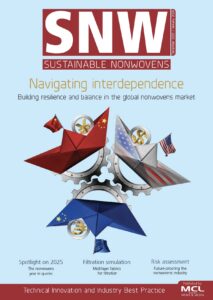
A full reports from WOW 2020 will be published in the next print issue of Sustainable Nonwovens.
Web: www.inda.org