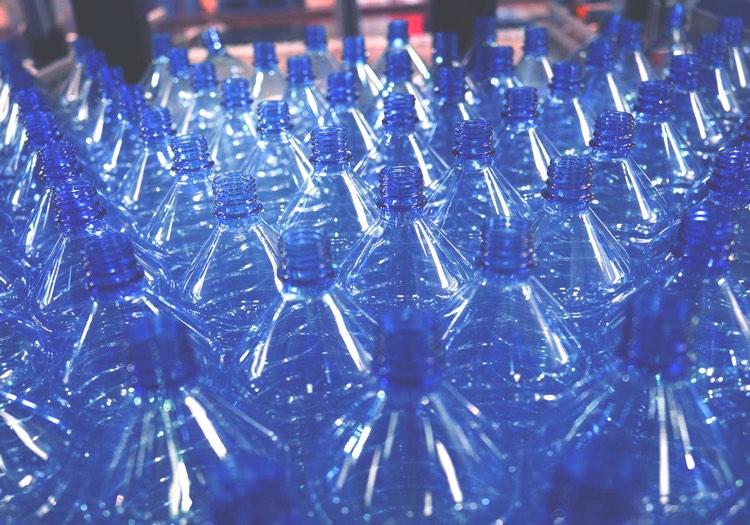
BRUSSELS – The European Commission (EC) has rejected calls from the bottled water industry to prioritise recovered PET bottles for recycling into new food-grade plastics – and preferably for bottle-to-bottle circular supply chains – according to media analyst EuroActiv.
The EC’s view is that any such restriction to open trade would risk distorting the current market for secondary materials.
As a form of polyester frequently used in the beverage industry, PET (polyethylene terephthalate) is strong, lightweight and completely safe for use in food-contact applications but PET from recycled bottles is also used extensively as a raw material for both textiles and nonwovens.
Freudenberg, for example, pioneered PET recycling for nonwovens in the early 1990s and today uses an estimated seven million PET bottles in its manufacturing processes annually.
While 60% of used PET bottles are successfully collected, new bottles placed on the EU market contain on average only 17% of recycled PET, while the rest is going predominantly going into textiles and nonwovens.
Bottle manufacturers have argued that this is downcycling, rather than contributing to circular systems and petitioned EC legislators to address the issue by granting them priority access to the recycled material they put on the market. They have suggested doing this by introducing a ‘right of first refusal’ for manufacturers in the EU’s packaging and packaging waste regulation (PPWR), which was tabled by the EC last November.
Speaking at a Euractiv event in February, Klára Hálová of Mattoni 1873, a Czech Republic-headquartered leader in the non-alcoholic beverage market in Central Europe, suggested other industries were “free-riding” on PET bottle manufacturers, EuroActiv’s Valentina Romano reports. As a consequence, competition for the recycled PET was causing the prices to skyrocket.
“It is really not sustainable and not affordable,” said Hálová. “We should, in my view, follow the basic principle of extended producer responsibility, which means we place on the market, we collect and we aim to recycle. We should have proportionate, fair access to the material.”