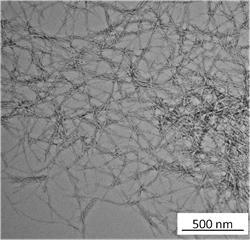
 Sugar is the new crude, says American Process, based in Atlanta, Georgia, which has formed a partnership with Futuris Automotive of Melbourne, Australia, to develop ultra-strong, lightweight automotive structural components reinforced with nanocellulose.
Researchers at Georgia Institute of Technology, Clark Atlanta University, Swinburne University of Technology, and the USDA’s Forest Products Laboratory are also involved in the project.
The goal is to replace heavy steel structures within cars, such as the seat frames, with advanced reinforced polymers that have cost parity with traditional materials. The nanocellulose composites promise to be an economical substitute for expensive light-weight carbon fibre composites, the companies believe.
The proprietary manufacturing process developed at American Process is said to be producing renewable, low carbon footprint nanocellulose with strengths the equivalent to Kevlar and at a price similar to conventional polymers. American Process plans to begin commercial sales of nanocellulose in early 2015, when its demonstration plant comes online in Georgia.
“This new eco-material can both substitute and enhance the performance of petrol-based plastics in an environmentally friendly and market competitive way,” says American Process CEO Theodora Retsina. “Carbon fibres are extremely strong and light but expensive to produce and used only in the highest end applications like aerospace and luxury vehicles. Nanocellulose has even lower weight than carbon fibres and is just as strong. With our manufacturing breakthrough, nanocellulose is a fraction of the price of carbon fibres. Cellulose is the most abundant natural organic material on Earth and it’s renewable and compostable. We didn’t invent nanocellulose, we made it less expensive, more thermally stable at high temperatures, and gave it functionality to blend with hydrophobic polymers – enabling market applications and opening the road to commercial production.”
“Futuris continuously seeks out promising emerging technologies in materials science that can help us provide innovative, high quality, and cost competitive automotive interior solutions,” adds Futuris’ CEO Mark De Wit. “We sponsor R&D for the most exciting technologies, like nanocellulose, which, we believe, will lead to the development of cost effective composite materials that can challenge the latest advanced steels and other materials in terms of performance, manufacturability and cost.”