 Technical Fibre Products (TFP) is now successfully recycling carbon fibre composites into high value nonwovens.
The company, which is based in Kendal, Cumbria, UK, and also has a US plant in Schenectady, New York, specialises in manufacturing wet-laid veils and has been involved in a number of UK research projects examining the feasibility of recycling carbon composites, primarily working with specialists at the University of Nottingham.
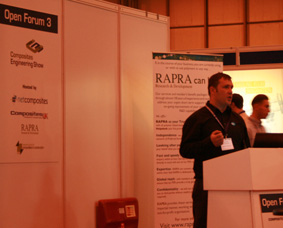
Speaking at this week’s Composites Engineering Show at the NEC in Birmingham, UK, TFP material specialist Mark James (pictured) explained that the recycling of carbon-based composites is not easy once they are impregnated with resin.
“The aim in developing the process was not just in response to meeting potential future legislation or to show our green credentials, but because there’s no point in throwing expensive materials away if it can be avoided,” said James. “The question was if we could get to the point of making products from the recycled materials that would be profitable or not.”
The basic approach to carbon composite recycling is pyrolysis – in which waste material is placed in high-temperature furnaces under an inert atmosphere. This results in the matrix material (the resin) being decomposed and the reclamation of the carbon fibre. This is a large scale recovery process, but the resulting recycled fibres have a char that makes processing them into wet-laid nonwovens difficult.
With an alternative fluidised bed method which has been developed at the University of Nottingham, the waste material is placed inside a large tube with sand at its base. Hot gas is forced through under the bed of sand, degrading the polymers as the sand abrades the surface of the fibres. Once the fibre is clean it floats off in the exhaust to be captured.
The strength and other performance characteristics of the recycled carbon fibres are said to be comparable to virgin products and they are now being converted by TFP into high value mats via the wet laying process.
The mats are suitable for the replacement of a number of glass fibre composites which in many cases are used by the same aerospace and automotive customers supplying the composite waste to be recycled in the first place – a practice that has grown considerably in the past few years.
The University of Nottingham has a strategic research collaboration with aircraft major Boeing, with whom it has worked since 2006, worth an annual $1 million.
The collaboration is working to further develop:
• Recycling processes.
• The technology to process recycled fibre into new applications.
• New products using recycled materials, in collaboration with other suppliers.