 Fewer sleepless nights for millions of children and their parents, more convenience and less drudge – these have been the sustainable achievements of the combination of superabsorbent polymers (SAPs) and nonwovens in modern diapers which is surely worth noting.
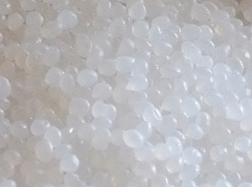
For the past 25 years, SAPs have been manufactured on an industrial scale by Evonik at its plant in Krefeld, Germany. The small granules can absorb up to 500 times their own weight in liquid to form a gel that, unlike a sponge, retains moisture even under pressure – for example the weight of the baby wearing a disposable diaper.
Evonik is one of the world’s largest producers of SAPs, with Krefeld as primary source for them in Europe.
The first large-scale production plant for superabsorbent polymers in Krefeld went into operation in 1986. This ushered in the international breakthrough for Favor brand superabsorbents. Research into superabsorbent polymers started in Krefeld in the 1970s. Today, Favor superabsorbents are used in more than 40 billion diapers every year.
Weighing in at about 40 grammes, modern diapers are less than half the size and much thinner than those of the 1980s, which weighed more than 100 grams.
And the research continues.
Although a typical diaper is worn only for a few hours, it is expected to fulfill high expectations. That’s why ongoing innovation is a high priority for Favor superabsorbents. In close collaboration with leading manufacturers of hygiene articles, researchers, and technicians at the Evonik laboratories are constantly working to develop new and even better SAPs.
The current trend is toward less cellulose. The goal is ultra-thin hygiene products that are more comfortable to wear, require less packaging and create less waste. To achieve this, the liquid retention capacity of the polymers, for example, must be further increased, or the distribution of moisture adapted to meet the precise specifications of the customer even better. Current research is likely to lead to SAPs capable of retaining even more liquid, so diapers can be considerably thinner. This will allow manufacturers to use far fewer raw materials, resulting in simplified manufacturing processes and savings on production and transport costs. It is conceivable, says Evonik, that diapers will soon look just like normal underwear.
In 1987, a year after the plant in Krefeld opened, a second facility went into operation in Greensboro, North Carolina. Additional facilities followed in 1992 and 1999 in Krefeld, 1993 and 2000 in Greensboro. A plant in Garyville, Louisiana was added in 1996 and one in Rheinmünster, Germany in 2006. In 2011, Evonik entered into a joint venture with Saudi Acrylic Acid Company (SAAC) to manufacture SAPs in Saudi Arabia. This plant is scheduled to produce 80,000 tons per year by the end of 2013 and represents an important step for Evonik in the growing Middle East market.