 MCL Global, the publisher of Sustainable Nonwovens will launch the ‘Insider’s Guide to Cotton and Sustainability’, a new handy booklet which will provide in-depth expert analysis and guidance on how to tackle the issue of sustainability in the global cotton supply chain.
To be published in January 2012, this unique 100 page booklet will be written by sustainable cotton expert Simon Ferrigno and edited by John Mowbray of Ecotextile News. It will offer readers’ new insight into how cotton growers, manufacturer’s, retailer’s and brands can navigate their way through the challenges and pit-falls of current and future global cotton sector strategies.
Topics covered will include the social, economic and environmental issues concerning pesticide use, cotton production data, the advent of IPM and agro-ecology, sustainable standards and systems, biotechnology, cotton pricing and mapping the way forward. It will be crammed full with lots of statistics and tabular information.
The first print run of this new, authoritative Insider’s Guide will cost just £25 plus postage and packing and will be updated every 18 months.
We are now taking pre-orders and expressions of interest, so for any further information and to book your early-bird reservation, please email [email protected]. Corporate, bulk order discounts will be available.


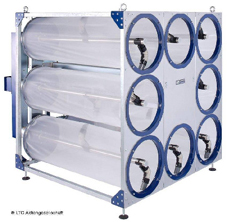
 The new CDF-8 CompactDrum filter, introduced by LTG, a supplier of filtration and waste handling equipment for the nonwovens and textile industries, benefits from the company’s inside loaded filtration technology.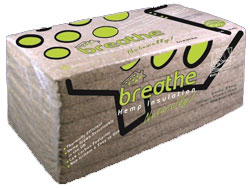
 Breathe natural fibre nonwoven insulation manufactured by UK company Hemp Technology has achieved a Euroclass E classification for reaction to fire, considerably extending its application potential.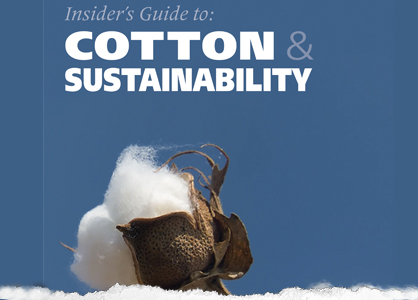





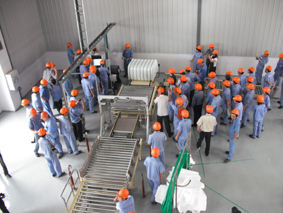
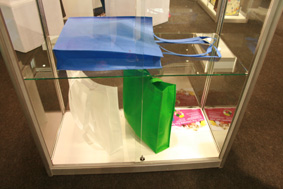
 Widespread consumer campaigns based on the fact that throwaway plastic bags can take up to 1,000 years to decompose, clog drains and pollute oceans have led to the emergence of new, durable bags – Bags for Life.
 In its just released 2011 Sustainability Report, Buckeye Technologies reports that it has reduced its greenhouse gas emissions from fossil fuels and purchased electricity by over 5% per ton of production since 2007, while generating 80% of its total energy needs from renewable biomass.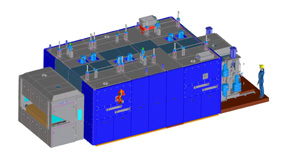
 In the manufacturing of spunlace nonwovens, drum-type dryers are usually employed after hydroentanglement. The unmatched temperature accuracy across the fabric width provided by Brückner’s new
 While superapsorbent polymers (SAPs) have been vital to reducing the weight of absorbent hygiene products over the past 25 years, the average baby diaper in 2011 still contains around 36.6% of fluff pulp, according to EDANA’s latest Sustainability Report – significantly more than double the 16% actual nonwovens content.
 Member companies of Carpet Recycling UK (CRUK) have announced a 60% increase in carpet landfill diversion for 2010 compared to 2009.
