• Advertisement
  • Author name: Haydn Davis

    Innovation

    Streamlining for cost savings

    trutschAt this week’s ITMA textile machinery show taking place in Barcelona, Trützschler Nonwovens has introduced its new Streamliner drum dryer which achieves much higher specific evaporation capacities than has previously been possible.

    “The Streamliner’s optimised airflow with minimal pressure loss is combined with an optimised fresh air based on temperature-dependent density changes,” explains marketing manager Eric Schinnerling. “This and the heating system ensure an optimised flow technology, while energy efficiency can be increased by external air treatment and heat exchange.”

    On today’s advanced standard-width spunlacing lines for nonwovens such as wipes, the company has calculated that as a result of the 30% less energy that this dryer makes possible, average savings of €410,000 a year can be achieved.

    In drylaid nonwovens production meanwhile, the crosslapper stage of a line has turned into something of a bottleneck due to the high speeds of cards at one end and of the bonding and winding systems at the other.

    Trützschler has aimed to remedy this with the development of its EKLB439 crosslapper. A number of new patents have been secured on its design, based on both new web guidance elements and the mastery of the dynamic factors influencing both process and machine.

    Durables

    Cutting carbon with super-insulation

    Energy savings eradstimated at an annual €64,200 per year are being realised via a new roofing system housing nonwoven blankets containing aerogel.
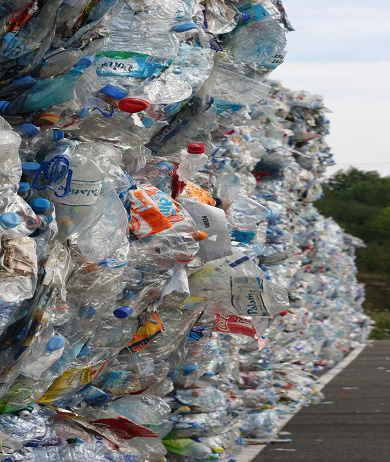
    In addition, a CO2 emission reduction of 904,000 kg per year is being achieved*.

    News

    Wellman acquired by Indorama Ventures

    wellIndorama Ventures is to acquire the recycling and fibre manufacturing businesses of Wellman International in Europe.

    The acquisition is expected to be completed within 2011 subject to necessary regulatory approvals.

    Wellman International has three production facilities in Europe – a polyester fibre plant based in Mullagh, the Republic of Ireland, with an output of more than 80,000 tons, a recycling plant at Spijk in the Netherlands with an output of 45,000 ton and a second in Verdun in France with an output of 28,000 tons.

    The plant in Ireland is capable of converting waste polyester into 100% recycled fibre from post consumer recycled bottles that can be used in a variety of premium applications such as in the hygiene industry.

    Wellman has the know-how for blend ingrecycled PET (rPET) and industrial waste and Indorama Ventures believe it will potentially contribute to making it a ‘zero waste’ company” with a low carbon footprint.

    Wellman will also provide access to proven recycling technology and the potential for a technology transfer to the company’s Asian assets with a reduced learning curve.

    Events

    Towards the tipping point

    abbySustainability, globalisation and innovation form three pillars of EDANA’s Vision 2020 report, which the organisation has developed specifically for its members, together with the Copenhagen Institute for Futures Studies (CIFS) and a pool of industry experts.
    At the forthcoming Outlook personal care conference taking place in Budapest, Hungary, from September 28-30th, EDANA’s marketing and communications director Abby Bailey will outline the key findings of the report and the specific activities most likely to affect businesses in the next ten years.

    “Sustainability is above all else a source of market opportunities,” she says. “Today, for example, we see stronger, lighter products replacing parts in cars and aircraft – where even a little weight saved has a compound effect on its performance. We also see greater opportunities in agriculture and construction, since products must fulfil multiple roles – reducing water consumption and protecting the plants from pests, or providing flexible yet strong materials for building.

    “Still, to contribute to making the world more sustainable, nonwovens will require innovation, which means revolution, but also evolution, by using the technology and processes already open to us in new and challenging ways.”

    This will be accelerated, she adds, by involving more people in the discussion.

    “This represents something of a change for many used to restricting discussions, but involving those with ideas from right across the production process is critical, because as far as nonwovens are concerned potential changes can make a difference across the whole value chain – from raw materials to end products. Concerns or topics specific to one stage of production have the potential to be a tipping point for the entire industry.”

    Megatrends are not independent, the Vision 2020 stresses, but tightly linked.

    “Globalisation means an eastward shift of both economic power and, in terms of innovation, R&D intensity.” says Ms Bailey. “The rise of a global middle class increases the demand on the resources of our planet, making the need for innovative approaches to the sustainable use of raw and recycled materials paramount.

    “Across these interlocked megatrends, however, one thing is clear – nonwovens are more valuable than ever. They help improve and protect not only people’s lives, but also the environment. And they hold the potential to provide innovative solutions to the challenges and opportunities raised by globalisation and sustainability.”

    Disposables

    The green carpet treatment

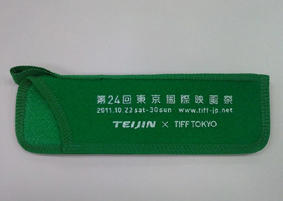
    teijinTeijin’s eco-friendly Green Carpet made of recycled PET bottles will once again usher in guests to the Tokyo International Film Festival between October 22-30.

    A total of 1,600 metres of 90cm Ecopet carpet – the equivalent to approximately 23,000 recycled half-litre PET bottles – will be used for the event and the green carpet will replace the conventional red version at the opening ceremony in Tokyo’s Roppongi Hills complex.

    Raw Materials

    Building blocks for the future

    dornbirnThe green chemistry market is already worth $10 billion in 2011, but will grow to a value of at least $100 billion by 2020, according to the American Green Chemistry Institute.
    New products based on renewable polymers offer a solution to many of today’s current issues and the Western world has a moral obligation to pursue their development.
    This was the view expressed by Robert Peoples of the institute at the 50th Dornbirn Man-Made Fibers (MFC) held last week in Austria.

    Innovation

    Certain growth in an uncertain future

    WeningerNonwovens will account for at least a quarter, and maybe as much as a third of all global textile production by 2050. This was the prediction of Friedrich Weninger, president of the Austrian Manmade Fibres Institute in his opening address at the 50th Dornbirn Man-Made Fibers Congress (Dornbirn-MFC) on Wednesday (September 14th). Speaking to assembled delegates at the annual conference, Weninger said, “The convenience of nonwovens, and their comfort and functionality will see them coming increasingly to the fore as the range of end-uses for technical textiles becomes much broader.”

    News

    Open house in Shanghai

    famIn parallel with the SINCE nonwovens show, Fameccanica Data is holding an open house at its new Fameccanica Machinery (Shanghai) plant which doubles manufacturing capacity for the company in China.

    This year, Fameccanica Data has introducing new baby diaper and adult incontinence manufacturing lines designed to offer the lowest unitary finished product costs by increasing efficiency and minimising waste levels.

    The new machines are also designed to simplify the retrofitting of future upgrade kits with short delivery times and reduced installation efforts.

    The model FA-X P10 baby diaper machine has a production speed of 1,000 pieces/minute or linear speed of 450 metres/minute, along with high efficiency and low waste levels.

    The model FIX P5 adult incontinence machine has a production speed of 500 pieces/minute or 400 metres/minute and can manufacture multi-piece products with either shaped or rectangular side-panels.

    Fameccanica Machinery (Shanghai) opened in 2004 and has been growing rapidly. With the opening of the new plant, the workforce, which has already climbed to 230 people, will soon be expanded to 280.

    The plant was recently recognised with an award from the Shanghai Municipal Commission of Commerce for its 2010 manufacturing record and exports.

    The open house, to which an invitation is extended to all customers, will take place on October 13, while an official company ceremony involving all employees will take place on the following day.

    The new plant is located in south-west Shanghai at Xinzhuang Industry Park in Min Hang District.

    September

    Sustainable Nonwovens 15.09.11

    Outlook

    Lenzing

    Wellman

    Planet Textiles

    RITE Group


    knowaste  

    Opening of first UK Knowaste plant
    Despite industry concerns over life cycle analysis (LCA) credibility in the separation of nonwovens, SAP and other raw   materials, the first of a planned five Knowaste hygienic disposables recycling plants has been officially opened in the UK.

    Read More


    wipes  

    100% Tencel and 99% Water = 1st place
    Akachan Honpo’s Water 99% premium baby wipes are the first ever hygiene product to receive an award from the Japanese Kids Design Association.

    Read More


    ecosure  

    SCS approval for EcoSure
    Scientific Certification Systems has completed the evaluation of EcoSure and EcoSure Wellstrand fibres manufactured by Poole Company in in South Carolina, USA and China.

    Read More


    outlook  

    Sharing a vision at Outlook
    As the biggest consumer goods company in the world with annual sales of $79 billion, Procter & Gamble has announced that it intends to replace 25% of its non-renewable materials with renewable or recycled alternatives by 2020 – with the eventual target of achieving a 100% replacement.

    Read More


    cotton  

    New guidebook on cotton and sustainability
    MCL Global, the publisher of Sustainable Nonwovens will launch the ‘Insider’s Guide to Cotton and Sustainability’, a new handy booklet which will provide in-depth expert analysis and guidance on how to tackle the issue of sustainability in the global cotton supply chain.

    Read More


    SNW media Kit
     

    ADVERTISE with Sustainable Nonwovens
    In the second decade of the 21st Century, it’s no longer a question of just ‘business as usual’ for the global nonwovens industry. Big changes are taking place, impacting on everything from the raw materials used and the processes developed, to the role nonwovens will play in existing and future end-use products for myriad markets.

    SUSTAINABLE NONWOVENS will reflect these changes, and advertising in the new web-site and printed magazine combination will ensure that your company is seen as one of the pioneers in the fast moving sector of the industry.

    Call David Jagger on: +44 1977 708488 for more details.

    More info here


    News

    Opening of first UK Knowaste plant

    knowasteDespite industry concerns over life cycle analysis (LCA) credibility in the separation of nonwovens, SAP and other raw  materials, the first of a planned five Knowaste hygienic disposables recycling plants has been officially opened in the UK.

    The plant at West Bromwich in the West Midlands will process a range of personal hygiene products and recover raw materials which can be used to make plastic components such as roof tiles and commercial tubes.

    “This first site in West Bromwich represents the beginning of a £25 million overall investment in the UK over the next four years,” Knowaste’s CEO Roy Browne told Sky News. “It will produce capacity for handling about a fifth of the absorbent hygiene products waste stream – equating to a saving of 110,000 tonnes of greenhouse gas emissions every year.”

    The plan is that commercial waste operators will deliver to the site from hospitals, nursing facilities and child care nurseries but the domestic market will also be targeted as the process of turning the plastic elements of sanitary waste into building products continues to be developed.

    The West Bromwich plant will be able to recycle approximately 36,000 tonnes of absorbent hygiene products, including diapers,  bedliners and incontinence aids.
    Knowaste has a partner company, Belgium-based NRC, which produces plastic roof tiles and much of the recycled diaper is sent there for re-use.

    Scroll to Top
    Generic filters
    Filter by Categories
    Logo

    Our free newsletter showcases the very best of our journalism, delivered to you twice a week

    Advertising
    With Us

    Help to support the purpose-led work of our team of journalists, international correspondents, and partners – and expose your product or service to our global readership.

    Logo

    Our free newsletter showcases the very best of our journalism, delivered to you twice a week